The caterer's catalogue, kept in one place
The starting point
The catalogue lived in the business tool, and the site copied it
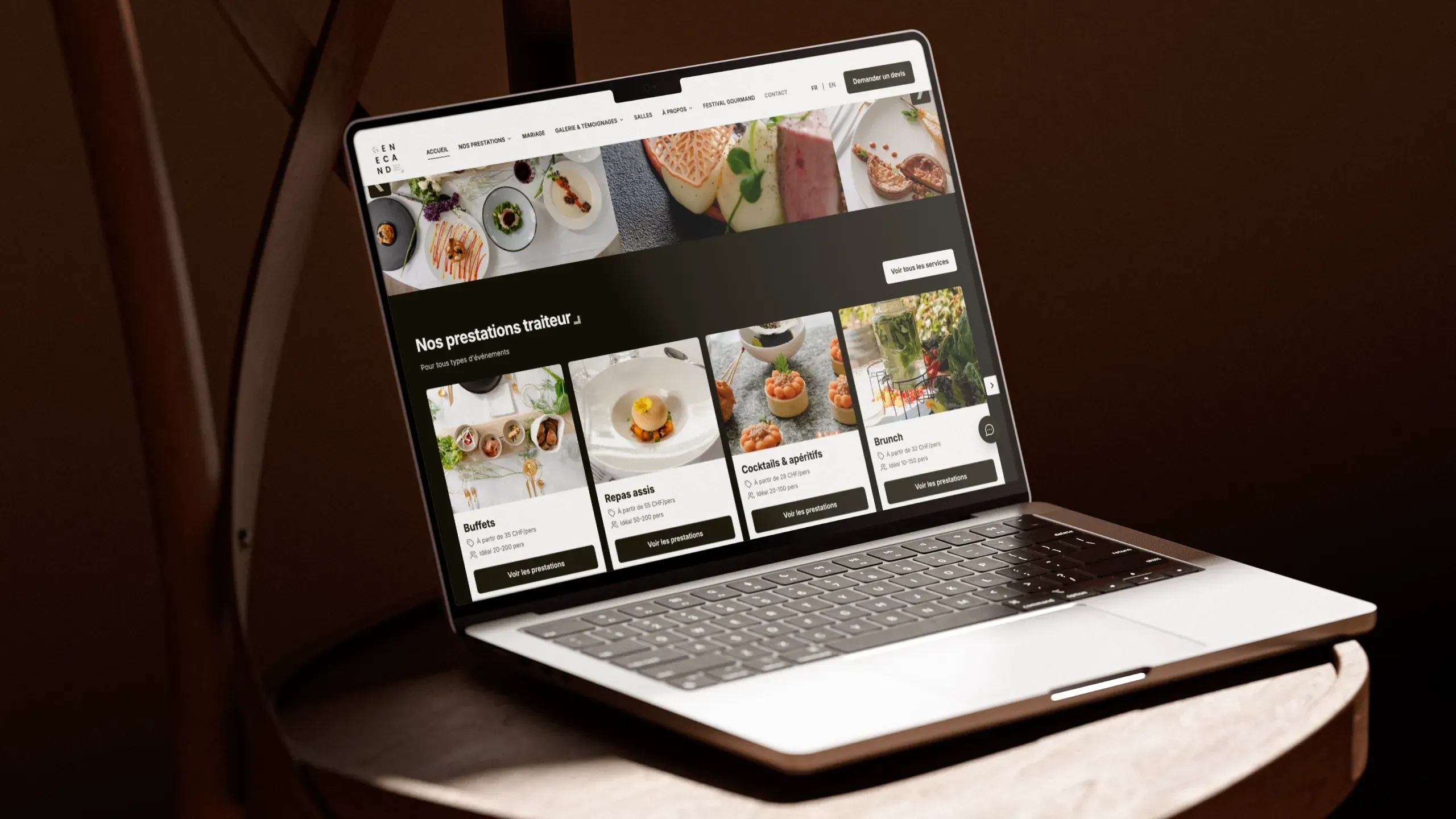
Genecand has been a caterer in Geneva since 1987. What a prospect looks for already exists in its business tool: the venues and their capacity, the packages, the menus, the indicative prices, the allergens.
And a couple looking for a wedding venue, a company organising a seminar and someone celebrating a birthday have neither the same questions nor the same path.
What it cost
Every text correction waited for a developer
The previous site had taken more than a year to come out, on an already ageing technology. Everything the team keeps in its business tool had to be copied into it, at every change.
The team couldn't publish anything on its own, and every visitor landed on the same full catalogue, whatever their request.
The solution
A site that reads the business tool and guides the visitor
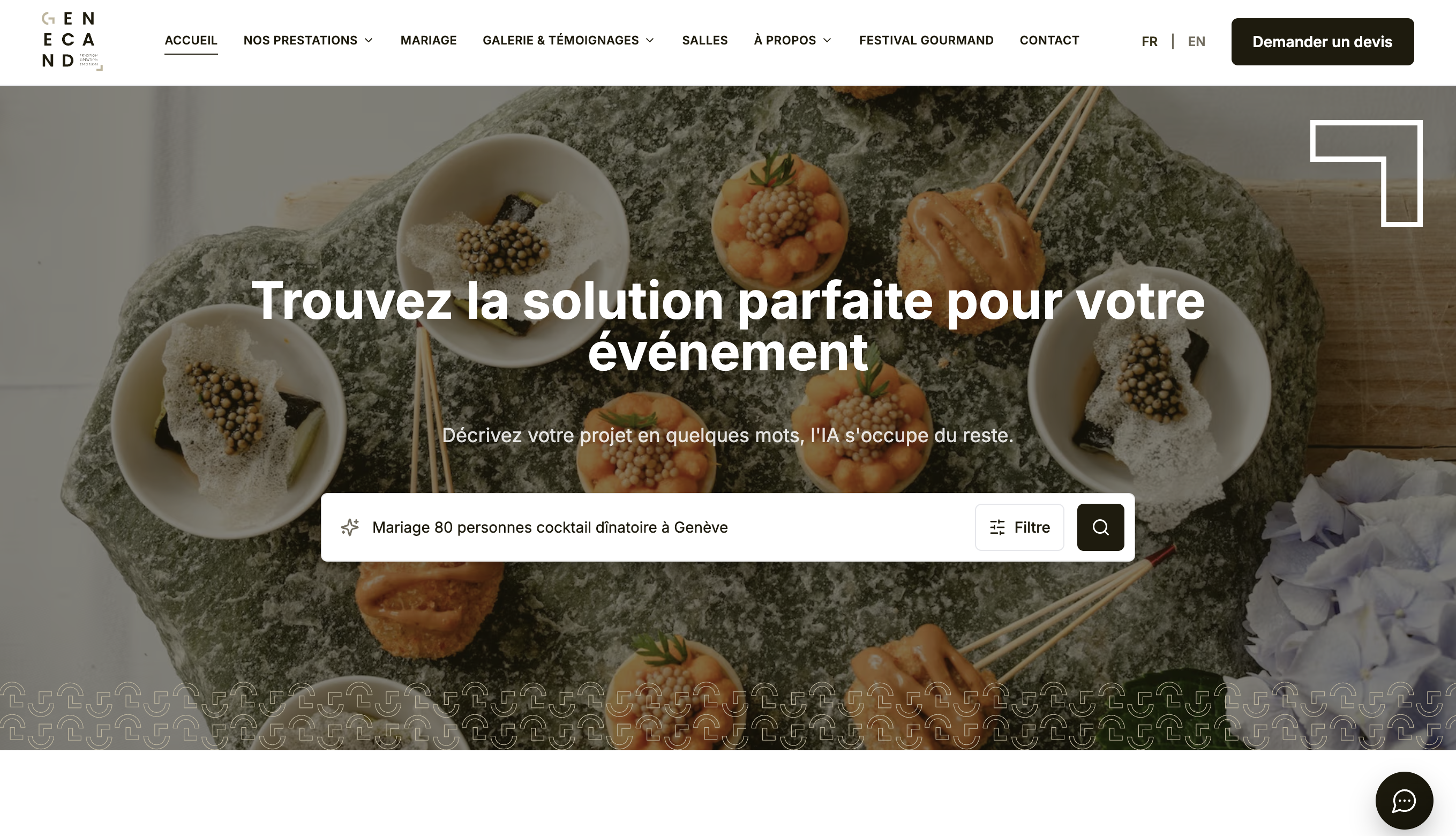
The bilingual site reads the venues, packages and menus from the business tool instead of copying them, and the team manages its own texts. The visitor answers a few questions about what they're organising, and lands on a tailored quote request.
This request goes back into the business tool as an event, where the team already handles its business. At launch, 370 old addresses were redirected to keep the search ranking already earned.
Avant / après
Avant
- A catalogue copied by hand
- The same catalogue for every visitor
- Every correction went through a developer
- A request to be requalified by hand
Après
- Venues, packages and menus read from the business tool
- A path based on what the visitor is organising
- The team publishes and translates on its own
- The request lands directly in the business tool
Key decision
Why does the site never read the business tool live?
The business tool has no public interface. Of three ways to read it, dedicated access to its API was preferred over a copy of its database, which would have welded the site to its structure: the slightest change on the business side would have become an outage on the public side.
And the site never queries it when a visitor loads a page: it reads its own copy. If the business tool stops, the site stays online with the last known version.
Key decision
English is carried by the site, because the business tool only speaks French
The business tool is in French only, and isn't meant to translate. All English content is therefore carried by the site and written by the team, including the translation of what comes from the business tool.
It takes effort with every addition, and this choice was made knowingly.
Key learning
A site the team runs itself doesn't stop at launch
Putting a site online isn't enough: the team has to take it over. A second round of work made the administration familiar: labels in French, "Show" and "Unpublish" buttons where you'd expect them, one photo per service.
Every page also got drafts, so a correction can be reviewed before it goes live.
Do your website and your business tool copy each other by hand? Let's talk.
We start with a conversation, not a quote.
Discuss a similar project