Insurance statements dozens of pages long, extracted line by line into the accounts.
The starting point
Medical cost reimbursements, buried in hundred-page PDFs
The Aigues-Vertes Foundation supports adults living with an intellectual disability, in a village in Bernex where they live and work. Part of what is due to them goes through health insurance and supplementary benefits, and arrives as statements: PDFs that can run to fifty to a hundred pages for a single person, sometimes far more. Each line states which cost was incurred and how much was reimbursed. And each one has to end up in the foundation's accounts.
What it cost
Transferring, page after page, without mixing up people
You had to open the document, figure out what kind of page you were dealing with (a summary, a detail, a cost decision), then transfer the amounts one by one. Add a difficulty nobody sees coming: the name printed on a statement almost never exactly matches the name on the file.
[The time this data entry represented remains to be confirmed with the foundation.]
The solution
The PDFs are dropped in, the system splits and reads, and the team ticks
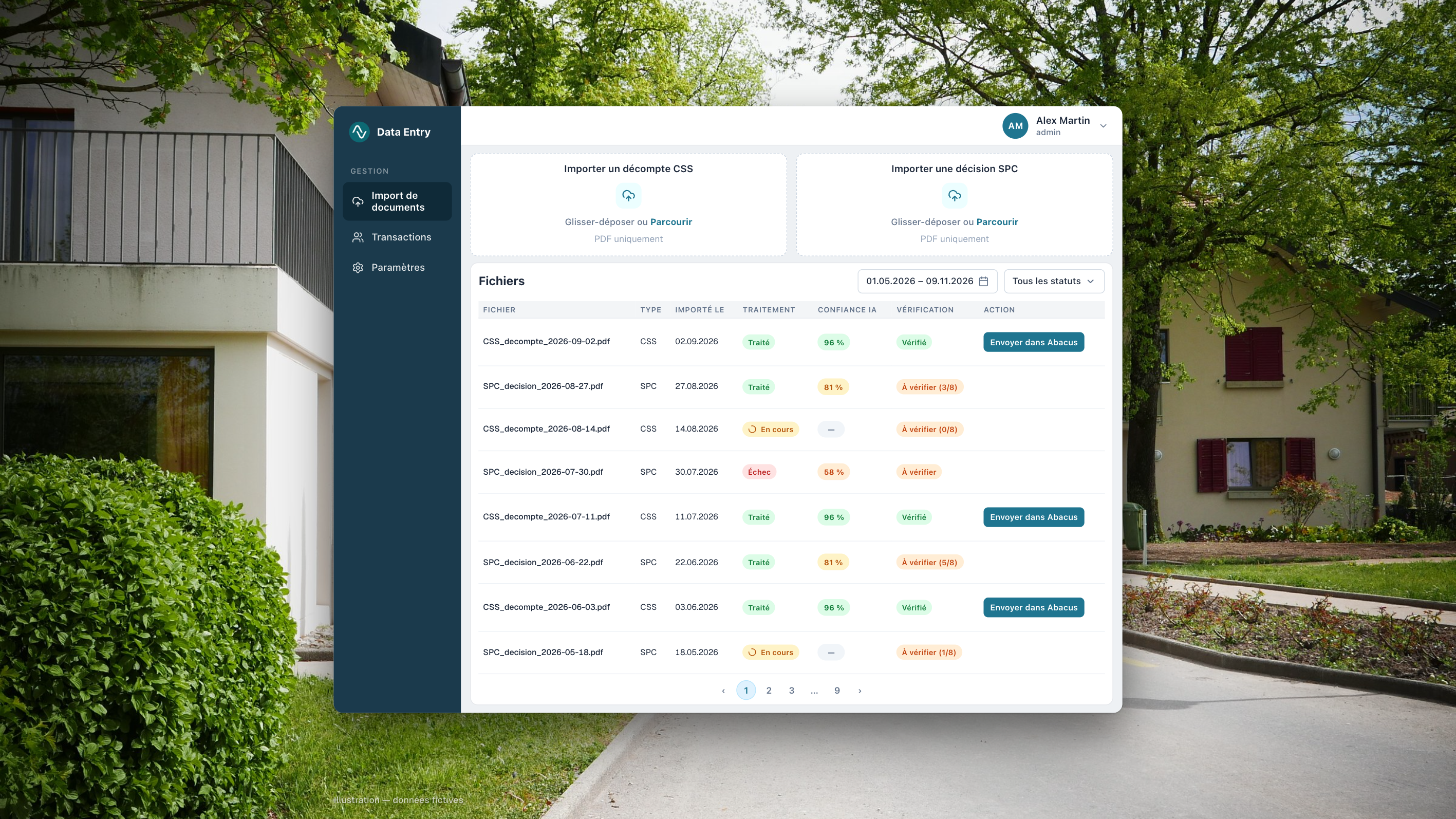
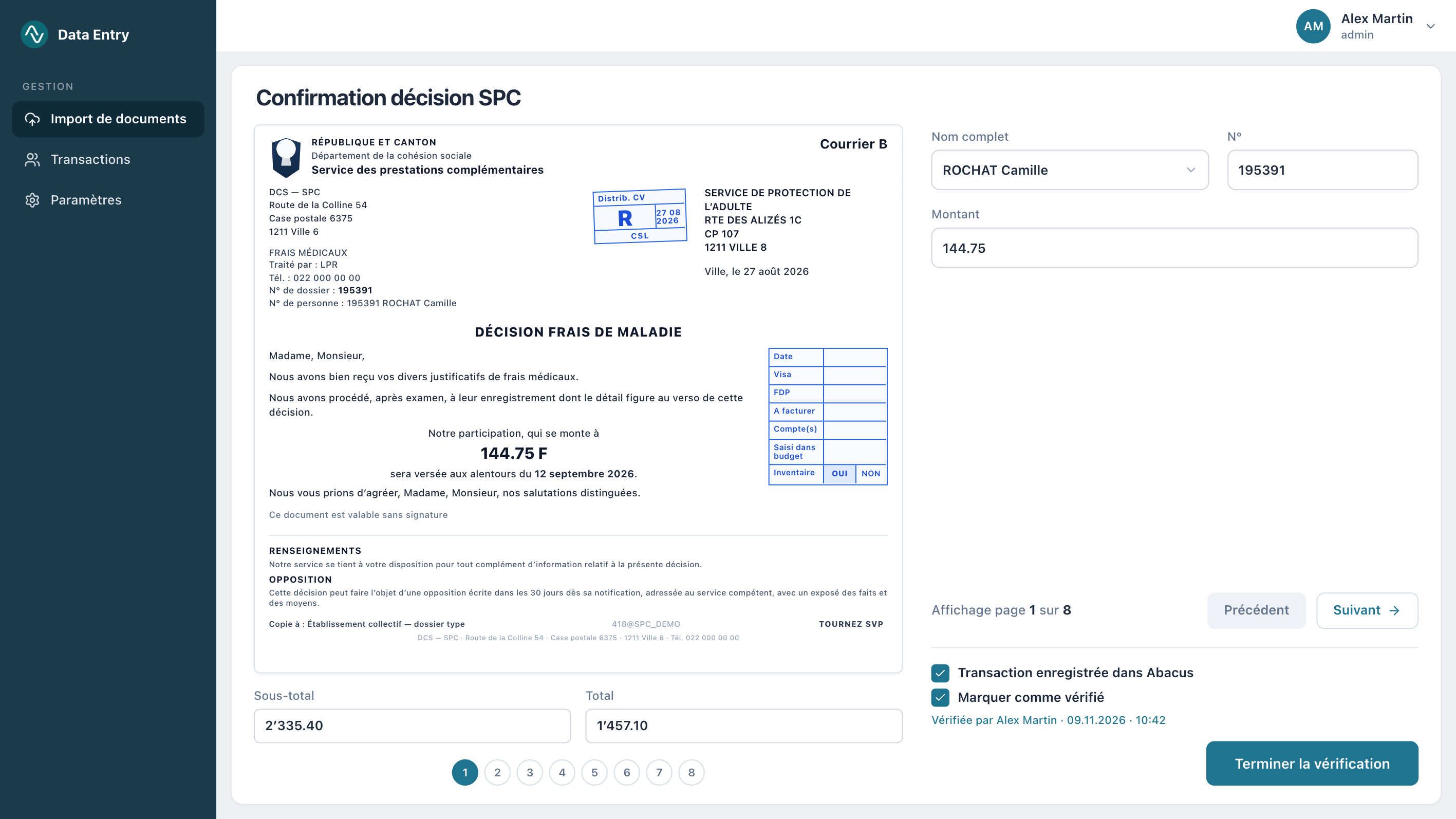
The team uploads its documents in batches. The system splits them page by page, classifies each page by type, then a vision model pulls out the amounts, the dates and the beneficiary concerned. Names read from the paper are matched to the real files by similarity rather than exact match: that's what absorbs spelling differences. The team then reviews page by page, corrects, and ticks. What is ticked goes into the accounting software, as a credit or debit as the case may be.
Avant / après
Avant
- Each page opened and read individually
- Amounts, dates and beneficiaries transferred by hand
- The name on the statement matched to the file from memory
- No record of who had checked what
Après
- Statements dropped in batches, with no prior sorting
- Amounts and dates picked out by the model, page by page
- Names automatically matched to the real files
- Each page ticked, with the name of whoever checked it
Key decision
The AI never concludes: and that's not an intention, it's the architecture
The system keeps two databases, and the split between them isn't negotiable: the one the model fills is a draft, the one the team reviews is authoritative. Nothing enters the accounts without a person having ticked the page, and the tick records who checked. For documents touching the money and health of vulnerable people, this was the only acceptable form.
Key learning
A name on a statement is never quite the name on the file
This is the detail that decides everything else. An abbreviation, a double first name written differently, a dropped accent: matching can't rely on exact correspondence, or half the lines fail and the gain disappears. So it's done by similarity, and that's where the chain's real reliability is decided: far more than in reading the amount, which a model does very well.
Are your statements still copied by hand? Let's talk.
We start with a conversation, not a quote.
Discuss a similar project